Where: Amsterdam, Netherlands
When: May 6, 2017
With: Dave
This may sound crazy, but when asked what my top priority sightseeing in Amsterdam was, the answer was not the typical coffee houses and Red Light district. It was the Anne Frank house.
Anne Frank's story has always captivated me. At the age of 13, she went into hiding above her father's warehouse along with her parents, sister and four other Jewish people to avoid being shipped off to a work camp during the Holocaust. They hid there for over two years before being captured by the Nazis and sent to their deaths. Throughout their time in hiding, Anne kept a diary documenting the experience in the attic. When the war ended, the diary was returned to her father, the only member of the family to survive the concentration camps, and was eventually published for all to read. It is one of the best selling books in the world.
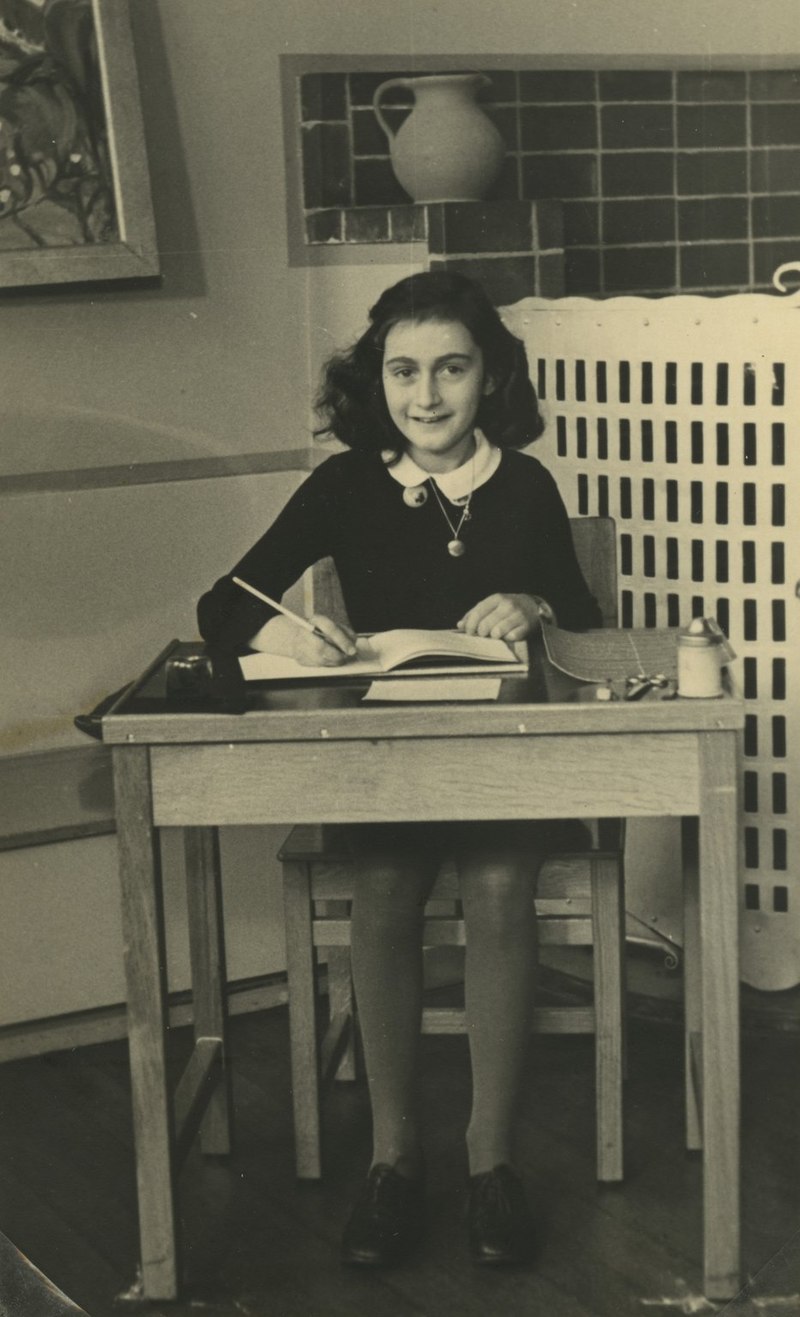
In anticipation of the trip, I decided to reread the diary. While I had read it twice before as a teenager, I was too young to quite comprehend the full impact of what the family went through. Now, as an adult reading it, I can appreciate how mature Anne was in the way she saw the world and interpreted and processed all the unimaginable circumstances around her. While the diary does contain some teenage rants and complaints that remind the reader of her age, it is also so poignant that you can't help but wonder how great of a writer Anne could have become if her life hadn't been ended so tragically.
While I could talk for ages about her story, I'll try to focus on the museum, or more accurately, the house in which they hid.
The building sits right on a canal. Visitors are led through the lower, front levels of the building, which back then held the warehouse and offices of Anne's father's company, Opetka, which manufactured spices and pectin for use in jam. Some of the business associates in these offices helped the Frank family through their time in hiding, and walking through their offices and seeing where they sat while knowing what they hid just upstairs was remarkable.


When: May 6, 2017
With: Dave
This may sound crazy, but when asked what my top priority sightseeing in Amsterdam was, the answer was not the typical coffee houses and Red Light district. It was the Anne Frank house.
Anne Frank's story has always captivated me. At the age of 13, she went into hiding above her father's warehouse along with her parents, sister and four other Jewish people to avoid being shipped off to a work camp during the Holocaust. They hid there for over two years before being captured by the Nazis and sent to their deaths. Throughout their time in hiding, Anne kept a diary documenting the experience in the attic. When the war ended, the diary was returned to her father, the only member of the family to survive the concentration camps, and was eventually published for all to read. It is one of the best selling books in the world.
While I could talk for ages about her story, I'll try to focus on the museum, or more accurately, the house in which they hid.
The building sits right on a canal. Visitors are led through the lower, front levels of the building, which back then held the warehouse and offices of Anne's father's company, Opetka, which manufactured spices and pectin for use in jam. Some of the business associates in these offices helped the Frank family through their time in hiding, and walking through their offices and seeing where they sat while knowing what they hid just upstairs was remarkable.


At the top of a flight of stairs, at the end of a long hallway sits a bookshelf against a wall. Unbeknownst to most at the time, this bookshelf sat on hinges and swung open to reveal an opening to a hiding place. A reconstructed bookshelf still sits on hinges, now left open for visitors to pass through. Standing there, I was overwhelmed to see this in person.

Past the bookshelf are two small rooms, divided by a wall. On one side slept Anne's parents, Otto and Edith, and on the other slept Anne and Fritz Pfeffer, a dentist that Anne did not speak fondly of. The remarkable thing on this level are the walls, the only evidence remaining of the people who lived in this space. Otto tracked the advance of the Allied forces on a small map on the wall, right next to a height chart for Anne and her sister Margot documenting their growth while in hiding. On Anne's side of the room, her prized collection of Hollywood starlet photos adorned the walls in an attempt to make things "more cheerful".
This floor also contained the one sink and toilet to be shared by the eight people. Again, surreal.
Climbing another flight of stairs is the large room that served as the kitchen and bedroom to the other couple sharing the annex, the van Pels. Just behind the kitchen is one more small room where the van Pels' son (and Anne's love interest) Peter, slept. In his room was the ladder that led up to the attic, seldom used but for the times that Anne and Peter wanted to be on their own looking up at the sky and pretending life was normal for a minute.
The house was...surreal. I have no other words. It felt like a movie set. It was hard to grasp that this was actually where they lived. While we were there, we could hear the bells chiming the hour at the nearby Westerkerk church. Anne references the bells in her diary as keeping her sane, helping keep time and reminding her of normalcy for just a brief moment when she heard them. It was so moving to hear.

This visit felt so incredibly unique and special compared to other tourist attractions, not just here but anywhere. As one person noted, while Anne puts a face to the suffering of the Jewish people during the Holocast, it is sobering to think of all the lives that were lost with no momument to remember them by.
No comments:
Post a Comment