Where: Budapest, Hungary
When: July 4, 2017
With: Dave, Pam, Aunt Lee, Uncle Joe, Mary Kate
Budapest was actually once two different cities, Buda and Pest, occupying opposite sides of the Danube River. While they united into one city in 1873, each side now retains its own unique character. While Pest has more of the museums, restaurants and hotels, it is impossible to not notice the Buda side, particularly thanks to the massive buildings built at the top of its hills. This includes a church, a palace, and the building that gives this area its namesake, a castle. (I had Ed Sheeran's song stuck in my head this whole trip).
As I said, from the Pest waterfront, its pretty much impossible to miss the buildings on Castle Hill. Luckily, our first hotel gave us primetime viewing of these beautiful buildings.




When: July 4, 2017
With: Dave, Pam, Aunt Lee, Uncle Joe, Mary Kate
Budapest was actually once two different cities, Buda and Pest, occupying opposite sides of the Danube River. While they united into one city in 1873, each side now retains its own unique character. While Pest has more of the museums, restaurants and hotels, it is impossible to not notice the Buda side, particularly thanks to the massive buildings built at the top of its hills. This includes a church, a palace, and the building that gives this area its namesake, a castle. (I had Ed Sheeran's song stuck in my head this whole trip).
As I said, from the Pest waterfront, its pretty much impossible to miss the buildings on Castle Hill. Luckily, our first hotel gave us primetime viewing of these beautiful buildings.

As did our first meal in Hungary.


And of course, the view at night.

And now a view of the church.

So after the family arrived, we set out one morning to trek across the Danube to Buda. And we did this across the most famous and photographed bridge in Budapest, the Chain Bridge.

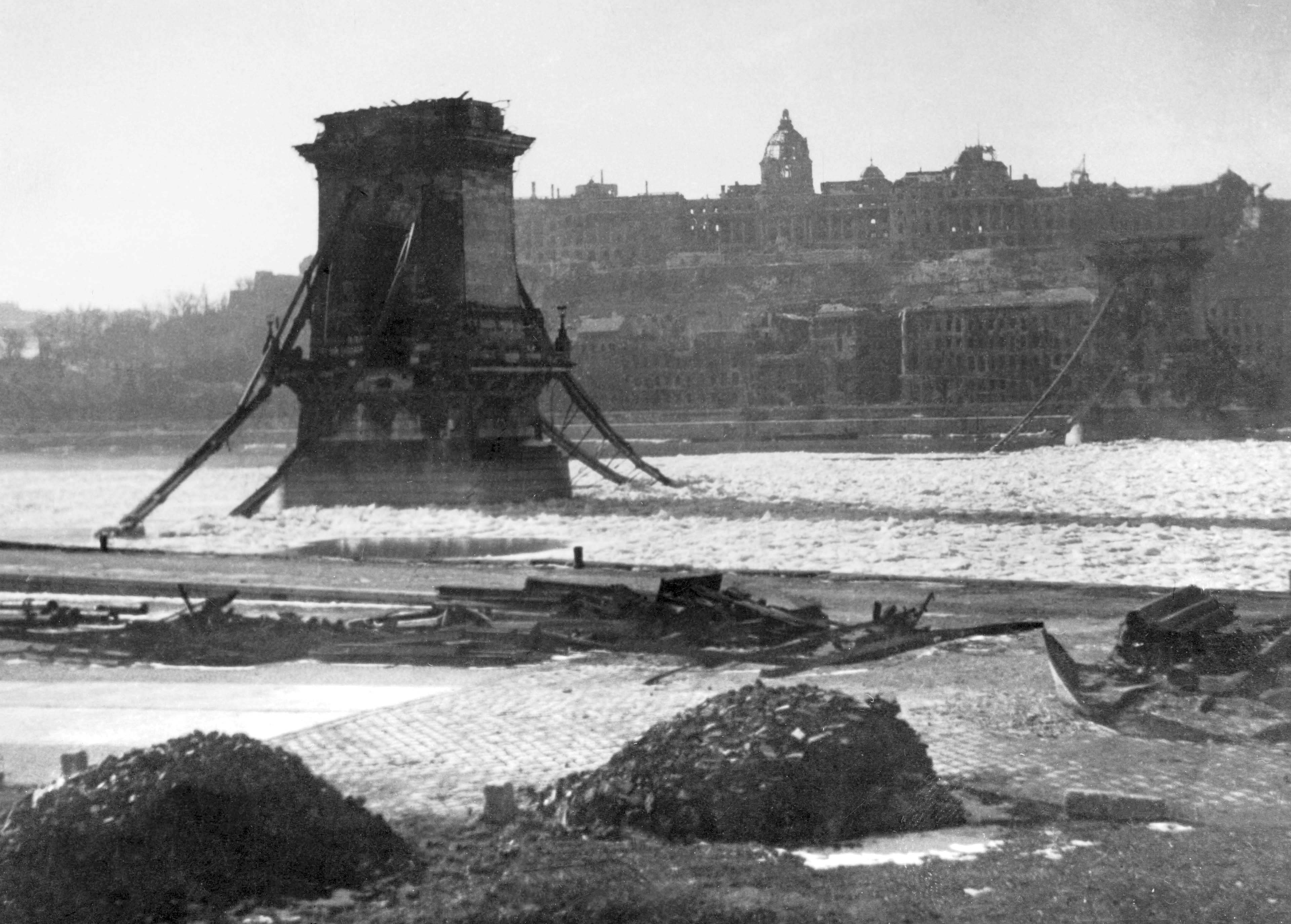
Opened in 1849, this was the first bridge to connect Buda and Pest together. It has seen one heck of a history, as it was blown to bits by the Nazis in 1945 to stop the advance of the Russians, leaving only the two towers.
It has thankfully been restored since then, as has Castle Hill.


Massive lions flank each entrance onto the bridge.


So pretty walking over.


Chain Bridge from Buda.

From here, it's a little daunting to be standing at the bottom of a massive hill looking up. But fear not, the Hungarians had us covered with a funicular. Opened in 1870, this funicular was also completely destroyed in World War II, not to be reopened until 1986.


If you pick the front cabin of the car, you are meant to have some great views. Sadly, we didn't know this until we got on. So we turned the camera inward to get some shots of us riding the funicular.

As soon as we came out, we were met by the Changing of the Guards in front of the palace.


After the guards found their posts, we headed over to take in the views from the top. It was beautiful seeing all of Pest across the river.
Here's Parliament.

Chain Bridge and the Church of Saint István.

And then, the family.


Right beside us was a giant statue of an eagle. Legend has it that the Magyars, the founders of Hungary, followed this eagle, knowing he would find food, and that he dropped his sword on this spot, indicating that they should settle here.


Our first stop was the castle, which looks more like a palace now. While a castle has sat here since the 1200s, the "modern" version has looked like this since the 1700s. It was destroyed during World War II, and while the exterior has been renovated, there's nothing to see on the interior. Now its used for government offices and houses a museum of Hungarian history.


On the other side of Castle Hill sits Matthias Church. Built in the 1300s, it was the church that held Hungarian coronations for years. In 1896, when Hungary was celebrating its millennial birthday, it got its colorful roof added on.


I always say how European churches never cease to amaze me that they each continue to bring something unique to the table in their design and architecture. This one was no exception. Every inch of the stone walls was painted in bright and vibrant color. It was beautiful.


One little chapel off the main church had a statue with a really cool story. When the Ottoman Turks invaded Hungary in the 1600s, the church hid this statue of Mary behind a wall. When the Turks moved in, they stored their gunpowder underneath the church and then used the church as a mosque. One day, while praying, an explosion of gunpowder went off and knocked that wall down revealing the face of Mary in the dust. Spooked that she was a ghost, the Turks ran out of the church, never to return.

She is now housed in this beautiful chapel.


Just outside of the Matthias Church is the Fisherman's Bastion, a long walkway along the edge of the hill providing views over to Pest. Each of the seven cones represents one of the Magyar tribes that founded Hungary.


There are two potential reasons this area was named the Fisherman's bastion. One is that the fisherman's guild, that guarded this part of the castle walls in the Middle Ages, helped fund its building. The other is even simpler: the view below used to be where the fisherman lived. Either one makes sense to me.


Right in front is a statue of King István I, first king of Hungary.

The view from the top.

After all this touring, we capped off our visit with a trip to a Hungarian patisserie, Ruszwurm. Almost 200 years old, this is one of the oldest patisseries in Budapest. We were lucky to snag a couple tables out front to enjoy some cake and rosé.

The other really cool part about our trip to Ruszwurm was that it provided a really special meeting spot. The purpose of our trip to Hungary was to come back with my Uncle Joe, who escaped the country in 1957, and visit with his family, some of whom he'd never even met.
So just a casual first time family meeting between Uncle Joe and his great niece and great nephew.


The Hungarians, Cecília and Gergely, brushing up on their English and meeting their family.

Family reunion on Castle Hill.

So while Castle Hill had a lot of history, and was a beautiful section of Budapest, the hands down best part was meeting the extended Hungarian clan. So fun!
No comments:
Post a Comment